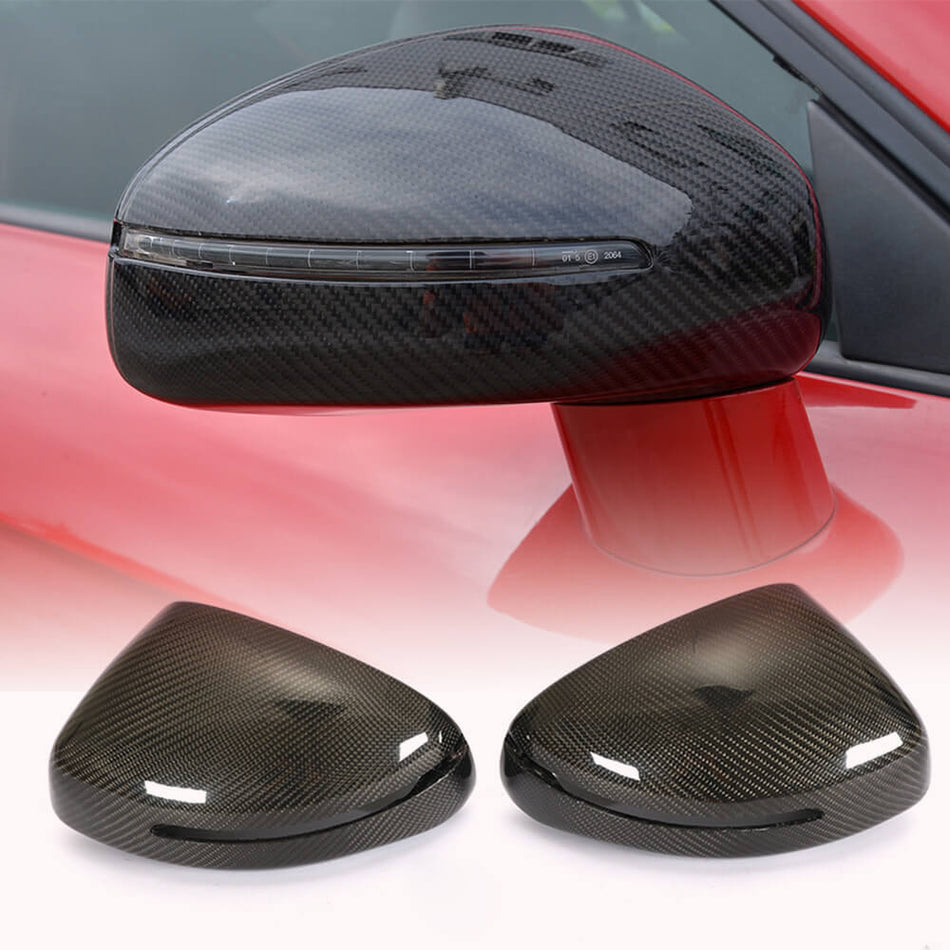
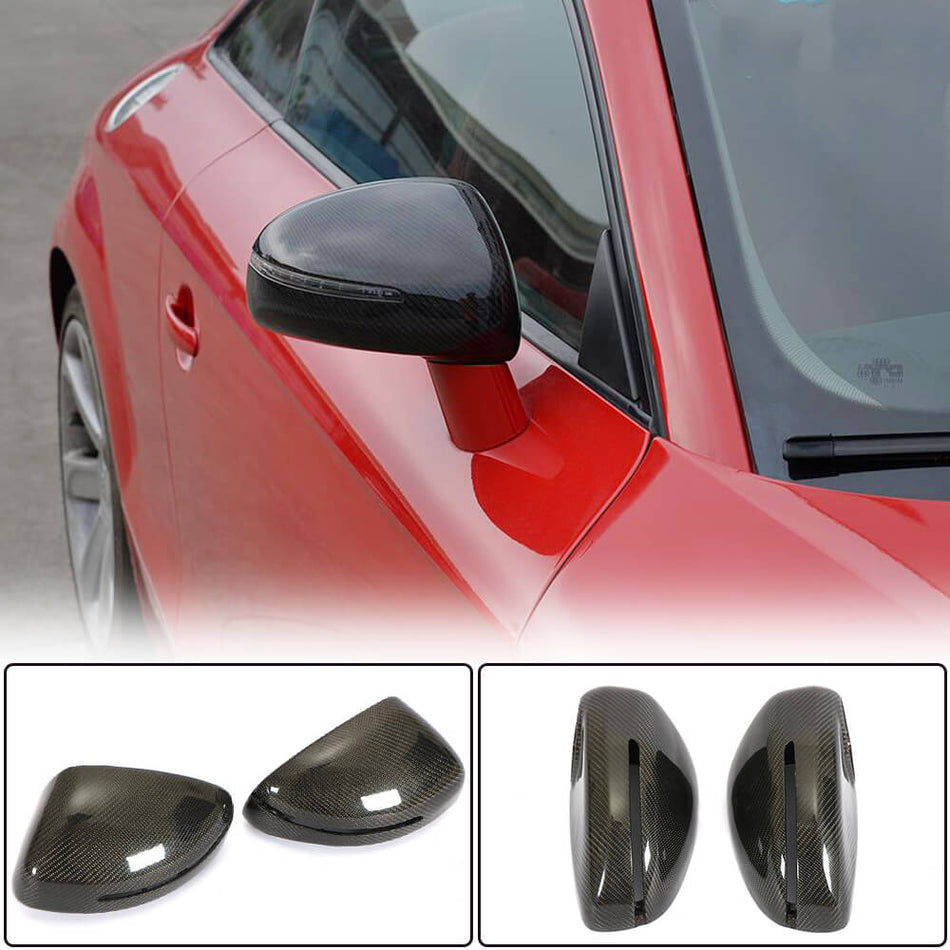
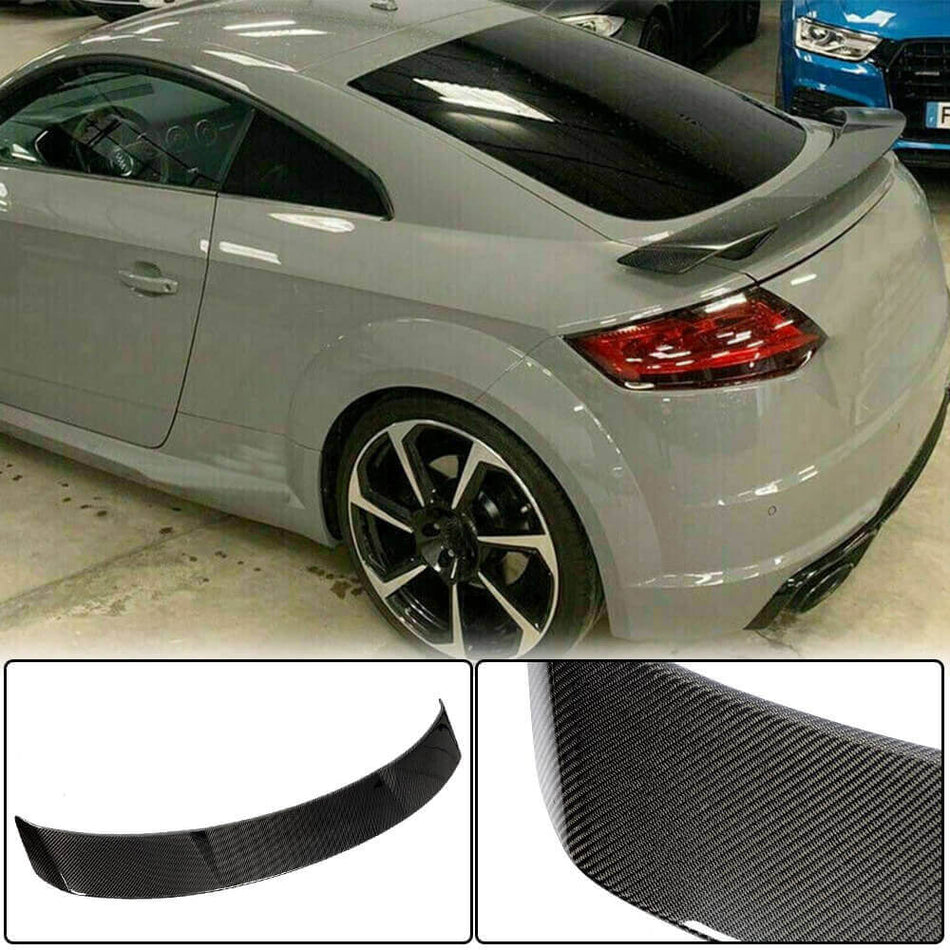
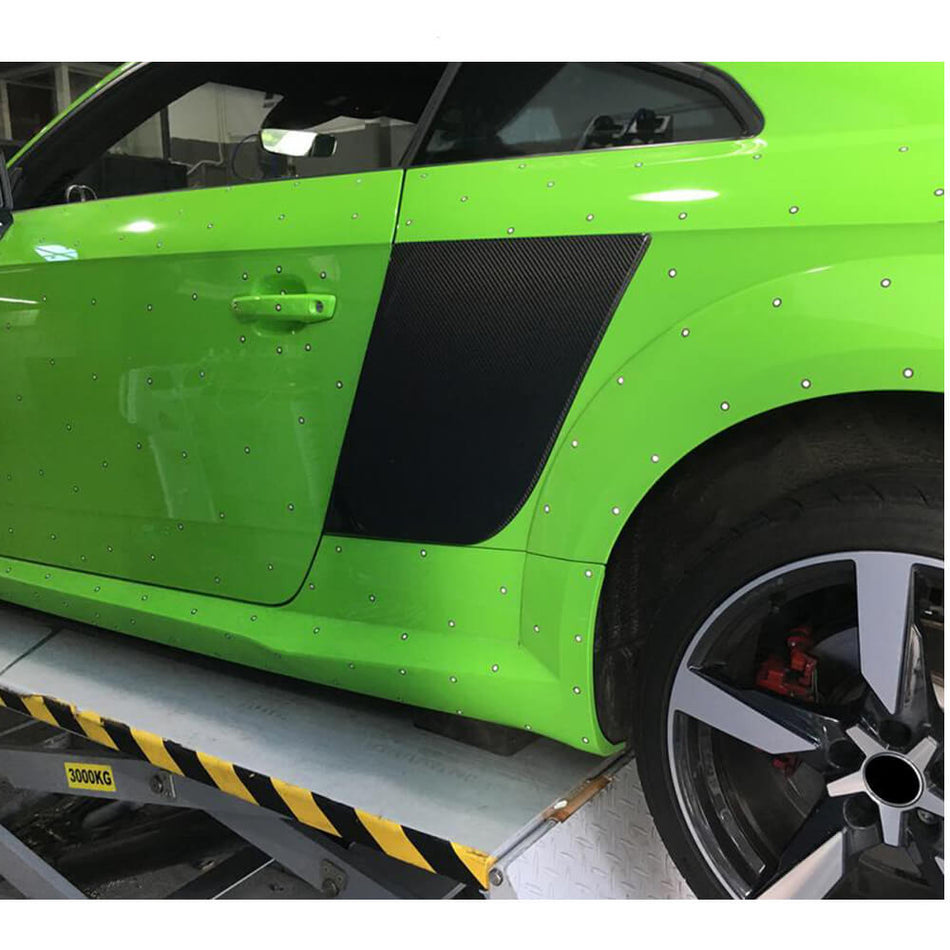
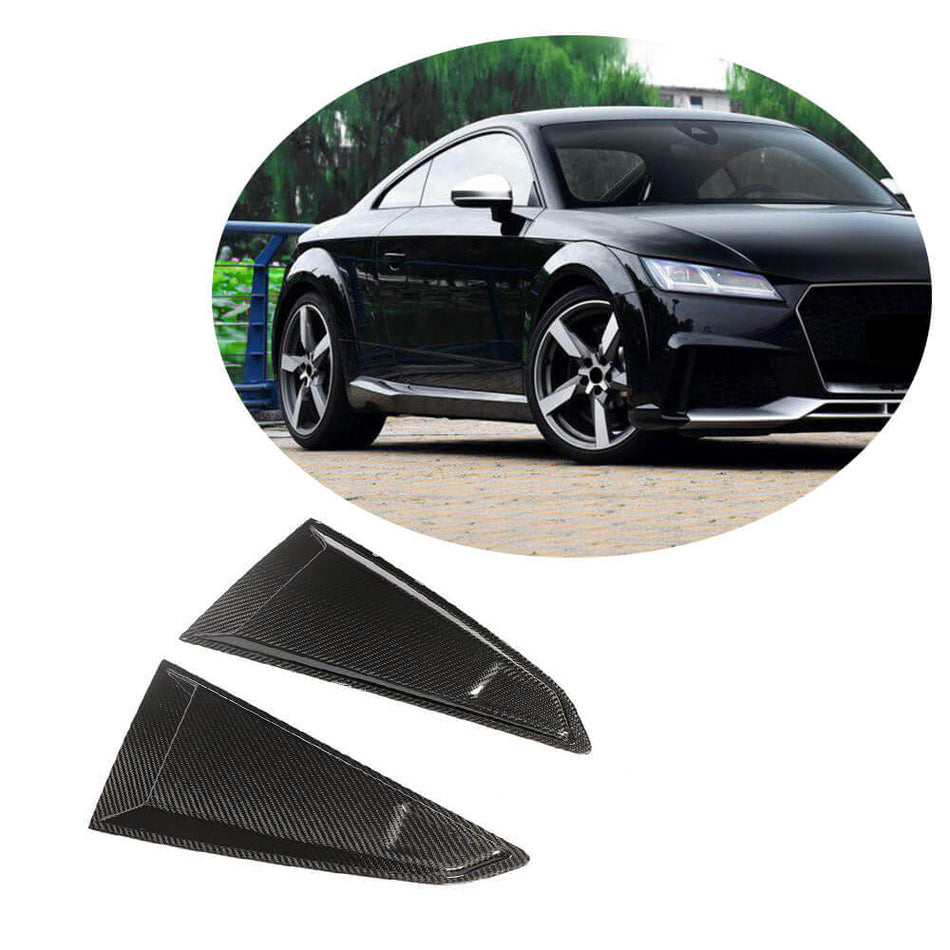
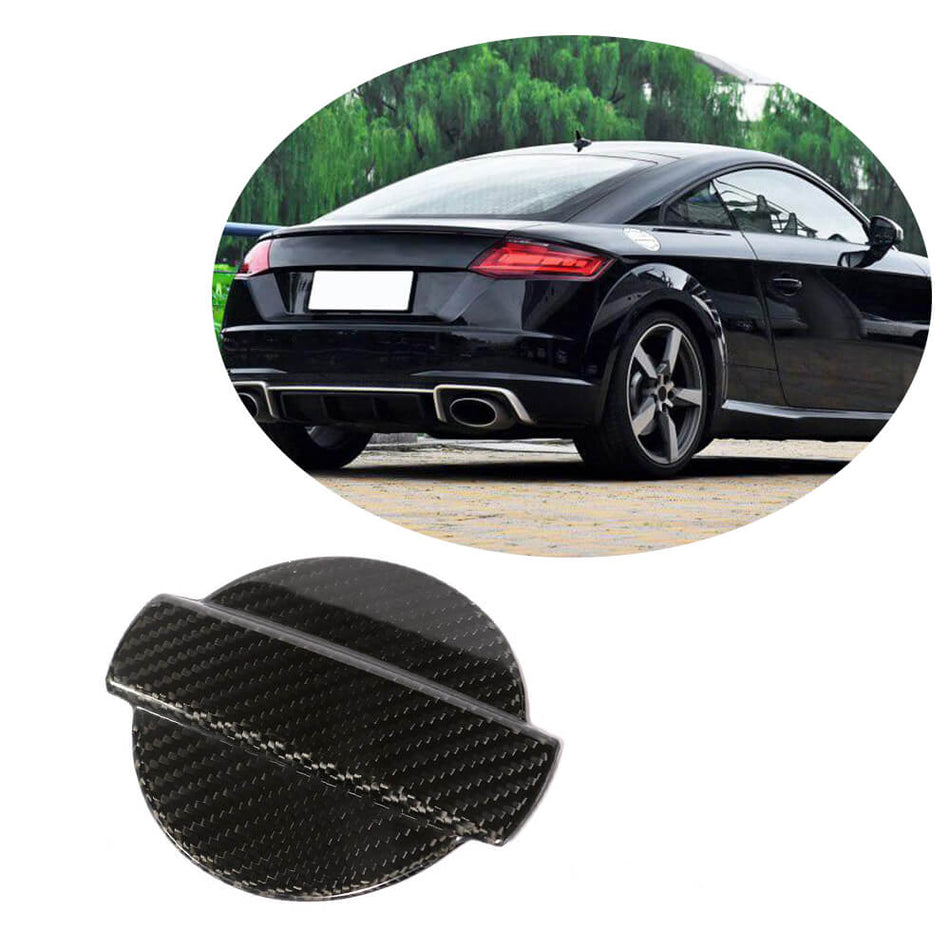
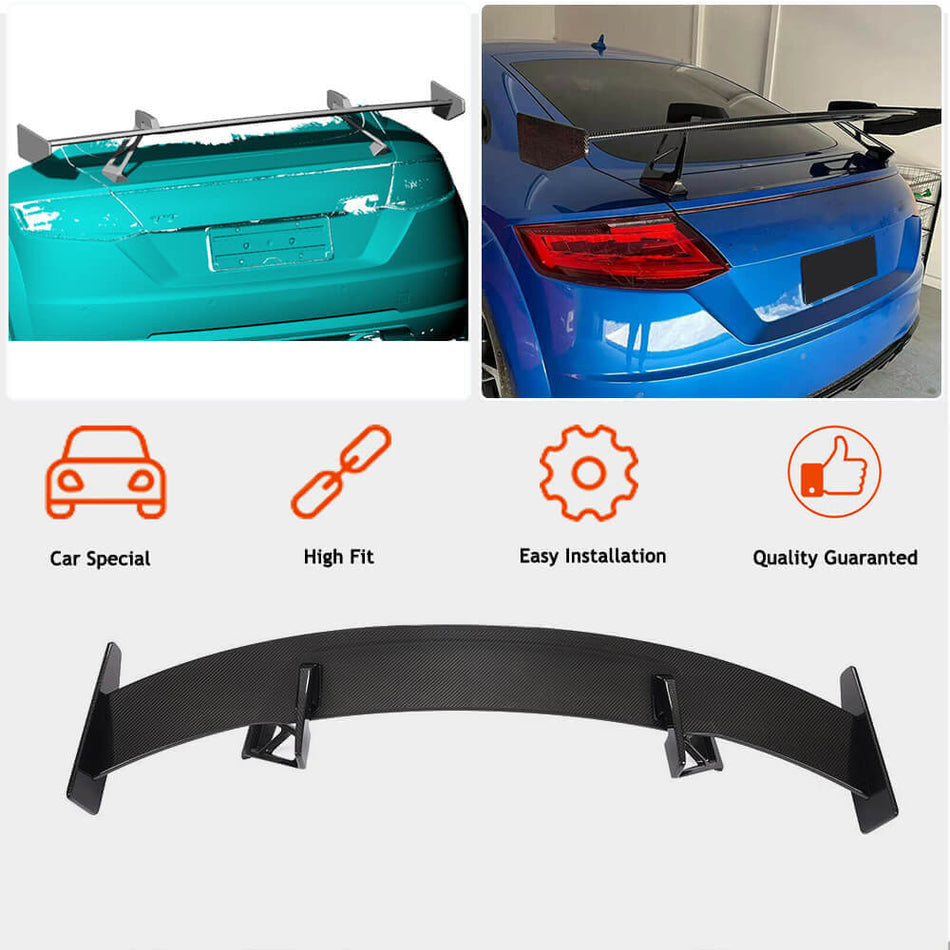
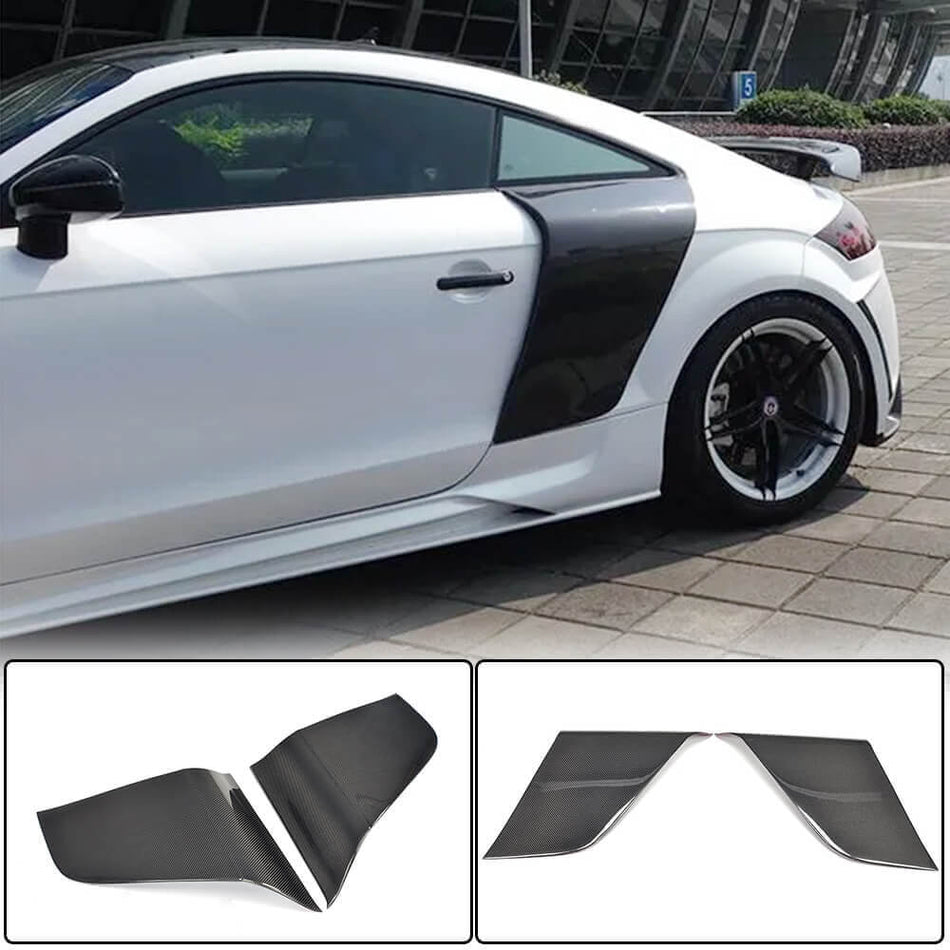
The Audi TT RS already has a stronger visual identity than the standard TT and TTS, with RS-specific bodywork, a compact coupe profile, a fixed rear spoiler and signature oval exhaust outlets. A successful exterior build should reinforce those original details rather than cover them with unrelated styling. The goal is not simply to add more carbon fiber, but to create a consistent package that looks intentional from the front, side and rear of the car.
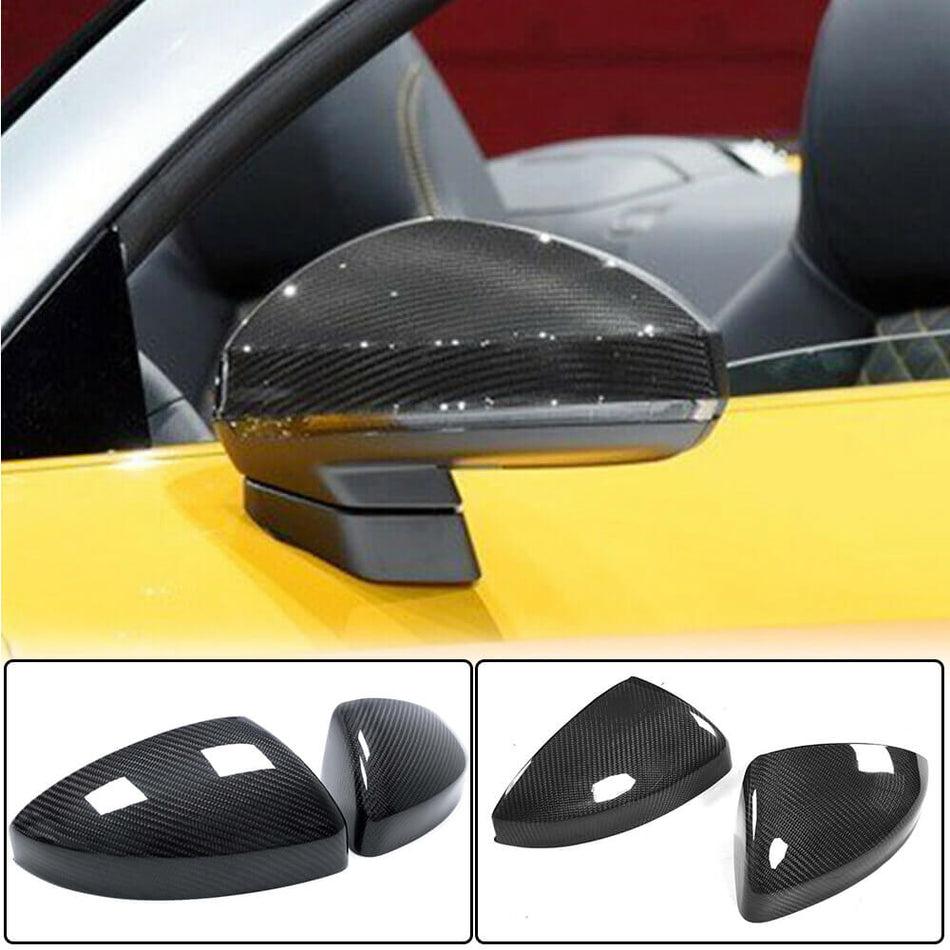
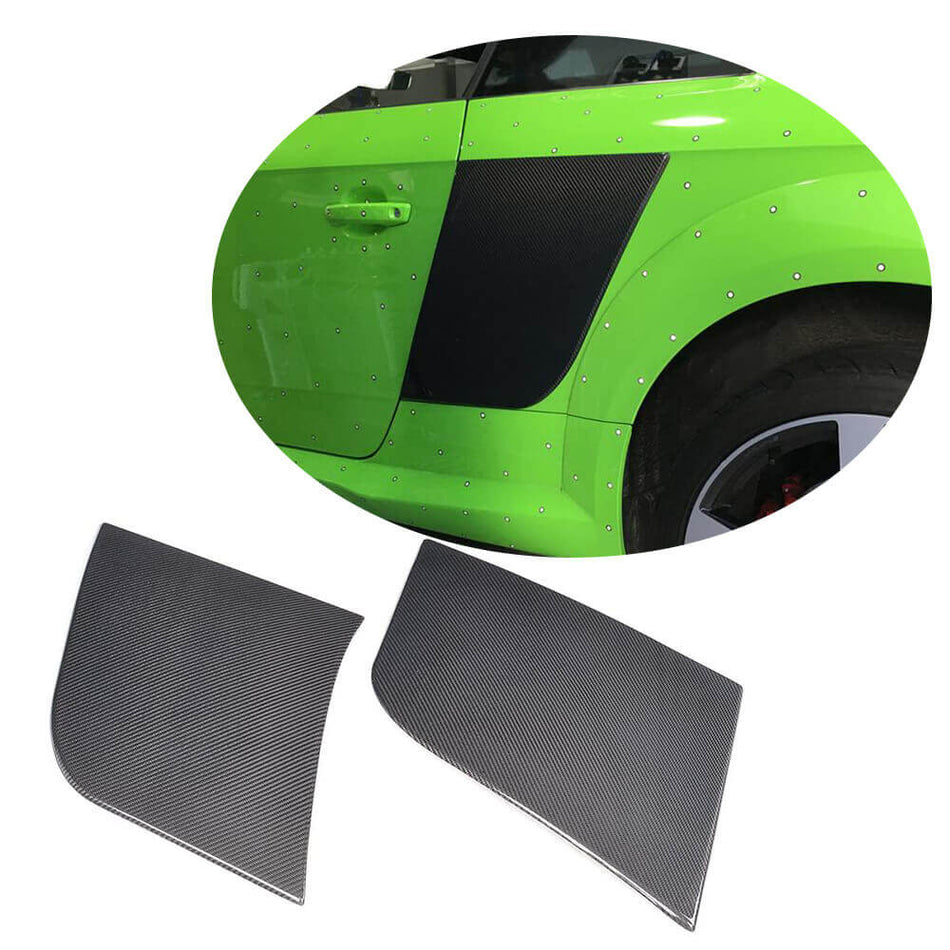
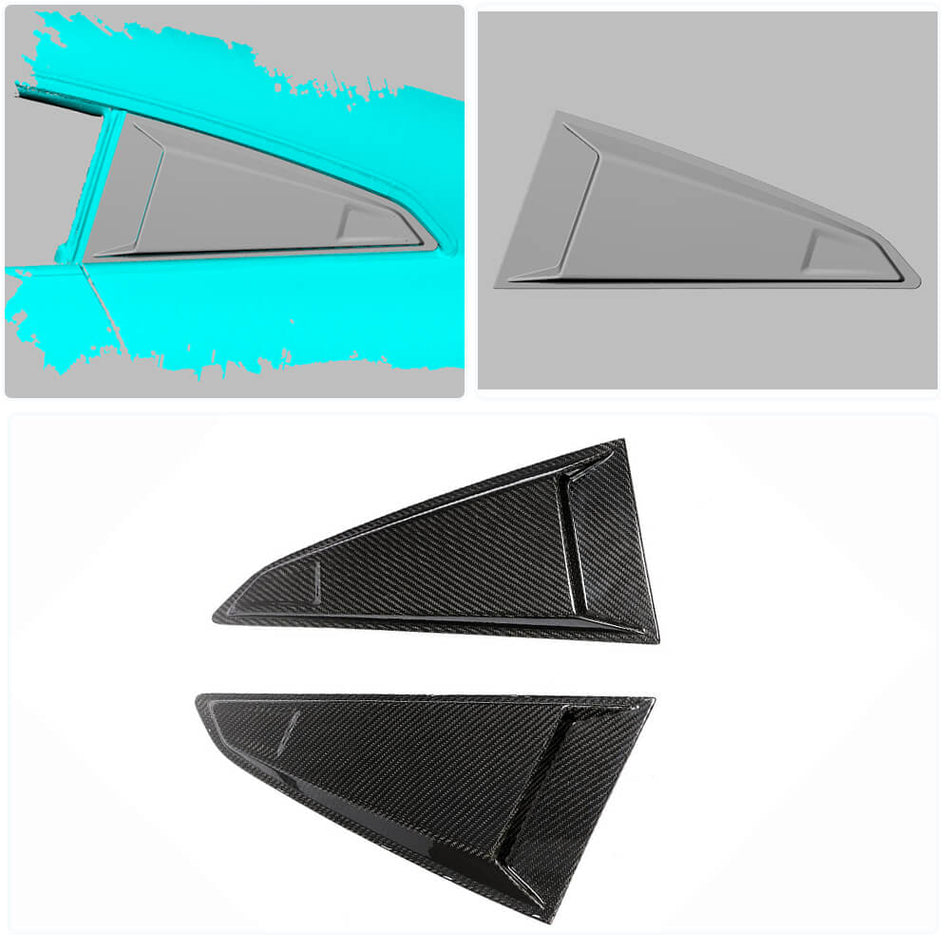
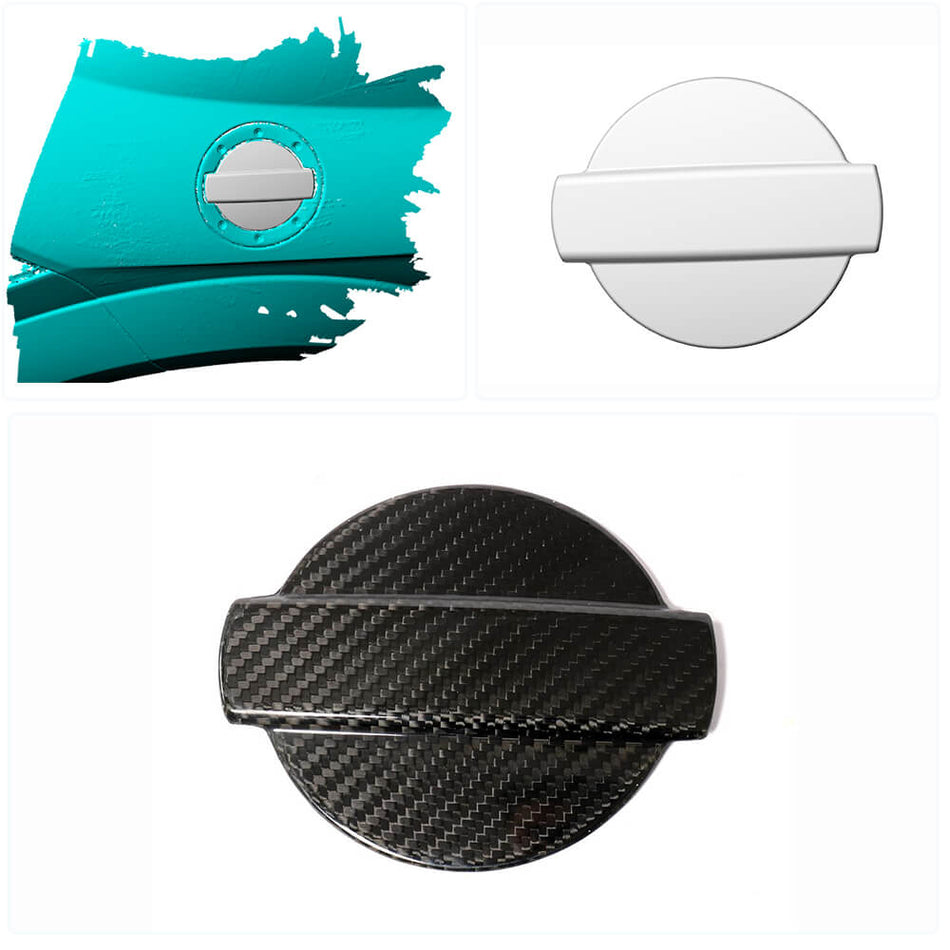
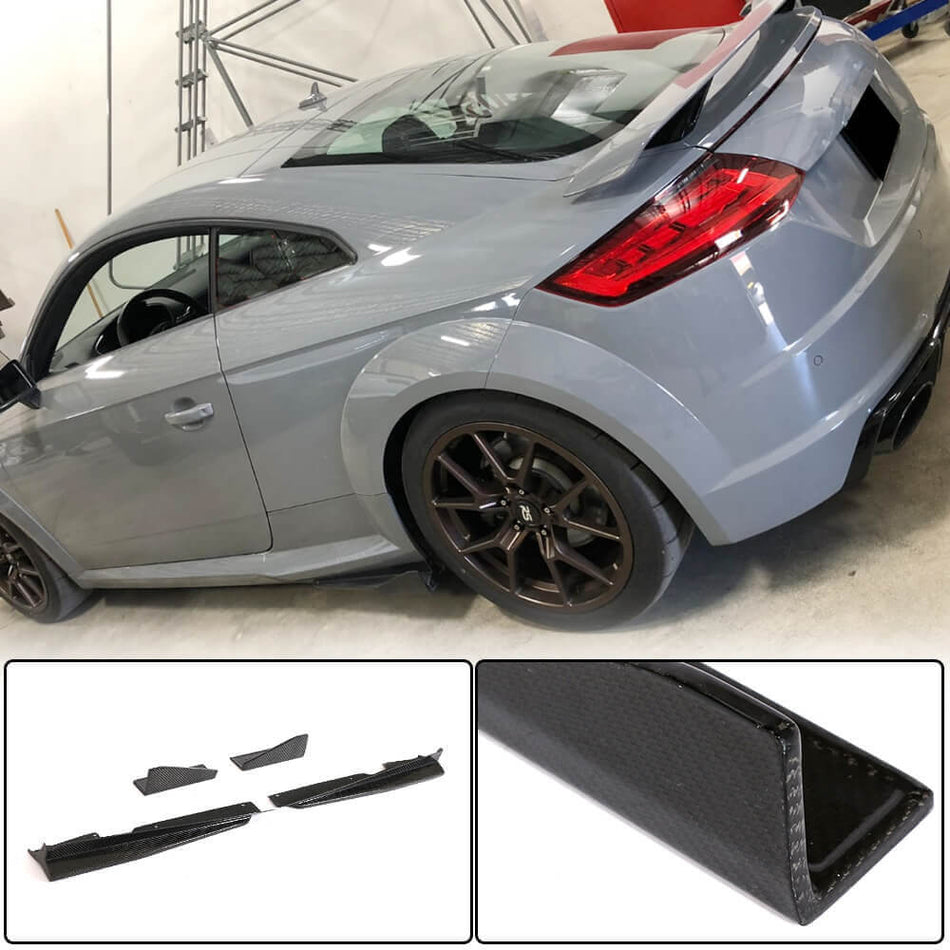
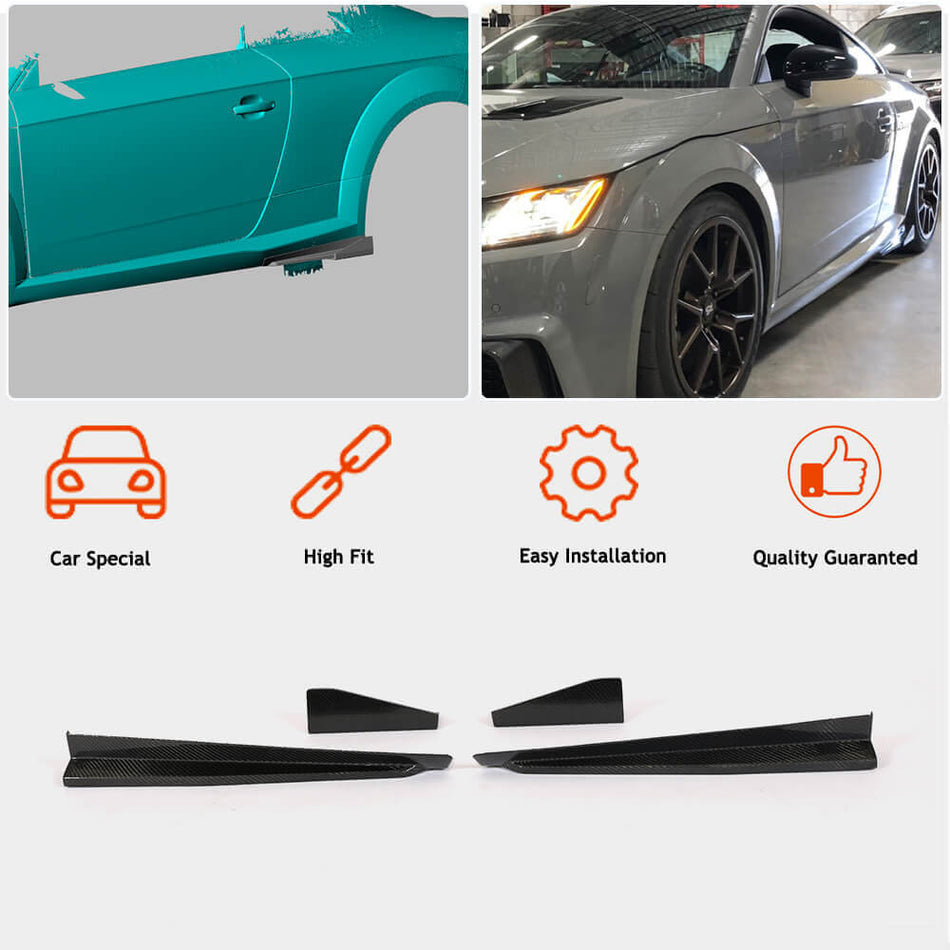
Our selection of Audi TT RS carbon fiber parts may include spoilers, side skirts, mirror covers, bumper trim, vent covers and other exterior accents, depending on current product availability. Some parts are specific to the TT RS, while others are shared with compatible TT or TTS body surfaces. Always review the individual fitment information rather than assuming that every part carrying the TT, TTS or TT RS name uses the same mounting points.
Plan the Exterior as a Complete Package
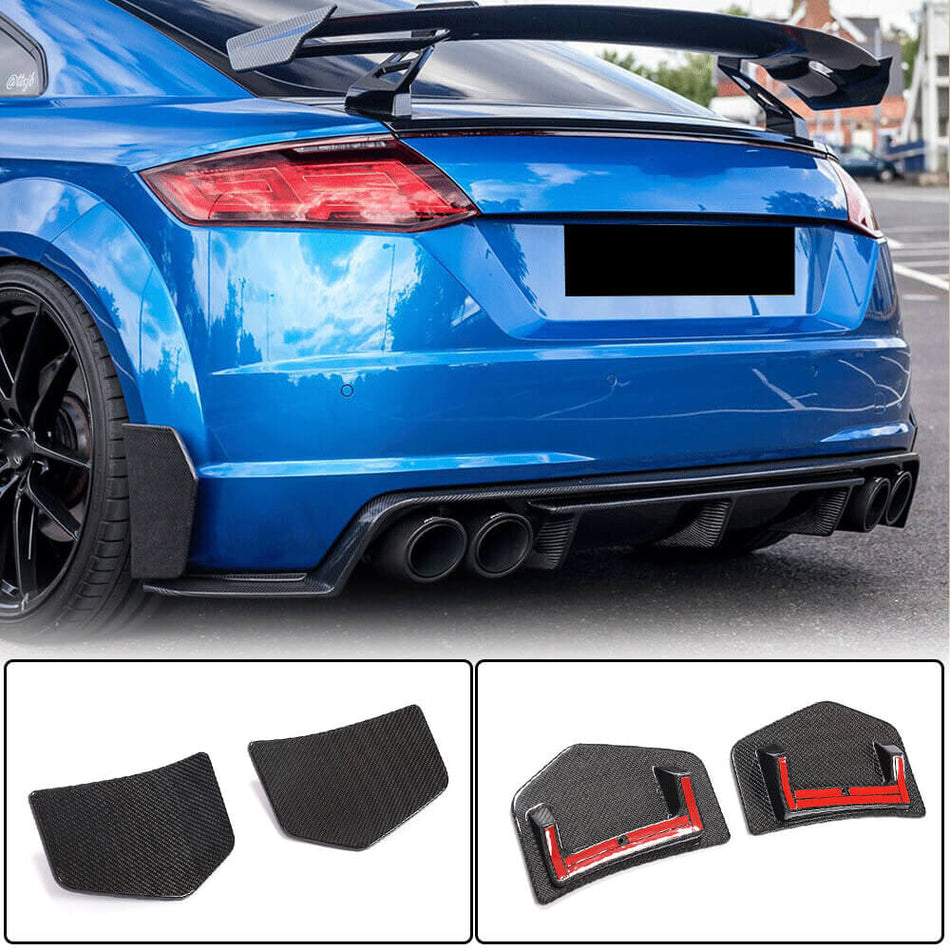
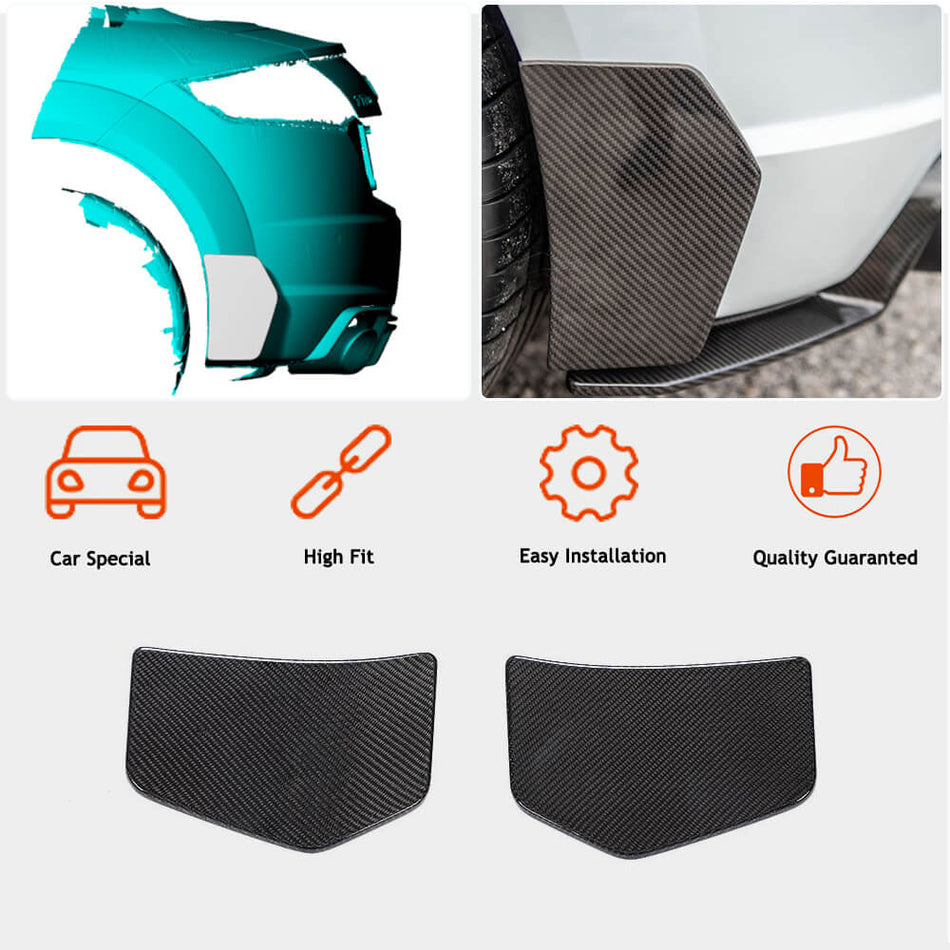
Many owners start with one visible area and build outward from there. Mirror covers or small vent trims provide a subtle carbon accent without changing the overall shape of the car. Side skirt extensions create a stronger lower-body line, while a rear spoiler, bumper trim or diffuser can add more definition around the TT RS rear profile and oval exhaust outlets.
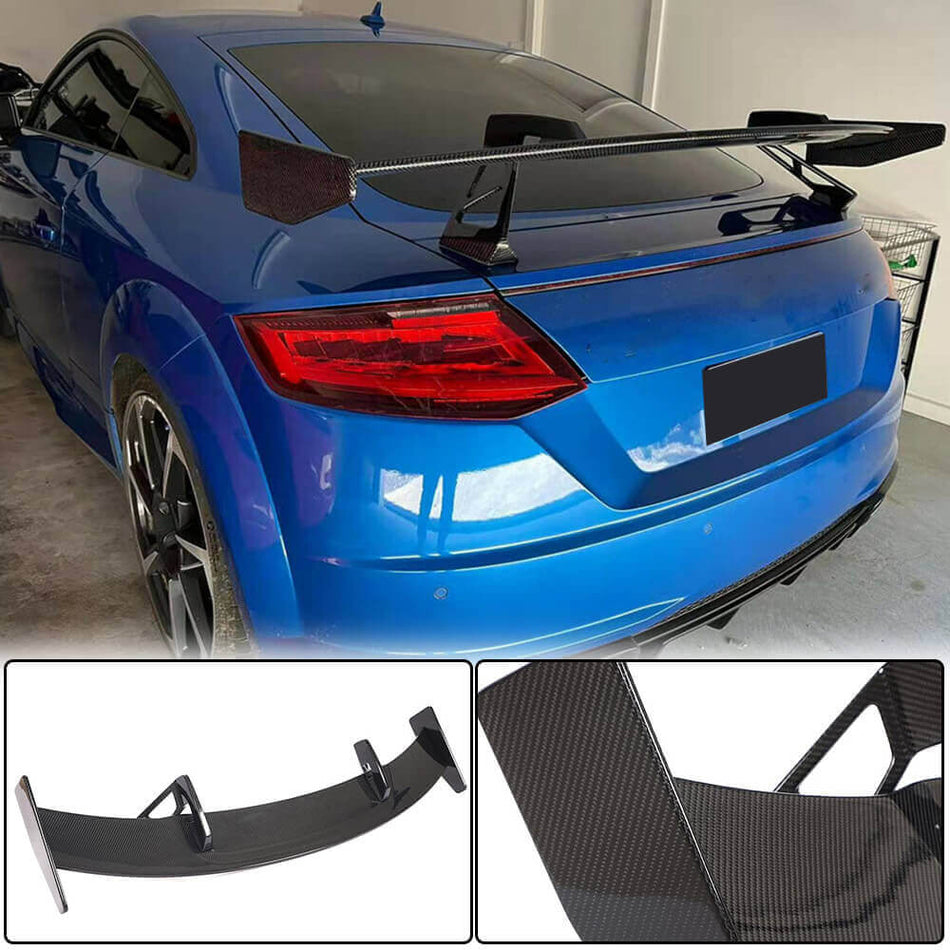
Before combining several parts, consider how aggressive each component appears relative to the rest of the vehicle. A large rear wing paired with otherwise stock bodywork creates a very different result from a coordinated package using side skirts, rear trim and smaller carbon details. Matching the carbon weave direction, surface gloss and visual depth across adjacent components also helps the finished car look like one planned build rather than a group of unrelated additions.
Choose Parts by TT RS Generation
Begin by confirming whether the vehicle is an MK2 8J or MK3 8S. Parts from the Audi TT RS MK2 collection should not be assumed to fit vehicles in the Audi TT RS MK3 collection. The two generations use different body surfaces, bumper designs, rear sections and mounting structures.
Model year alone is not always enough to confirm compatibility. Check the exact front or rear bumper, existing spoiler, exhaust outlet arrangement and any previous exterior modifications. A part shared with the TT or TTS may fit because the relevant panel is common between models, while an RS-specific front lip or rear diffuser may depend on the TT RS bumper and oval exhaust configuration.
Check the Existing Spoiler and Rear Configuration
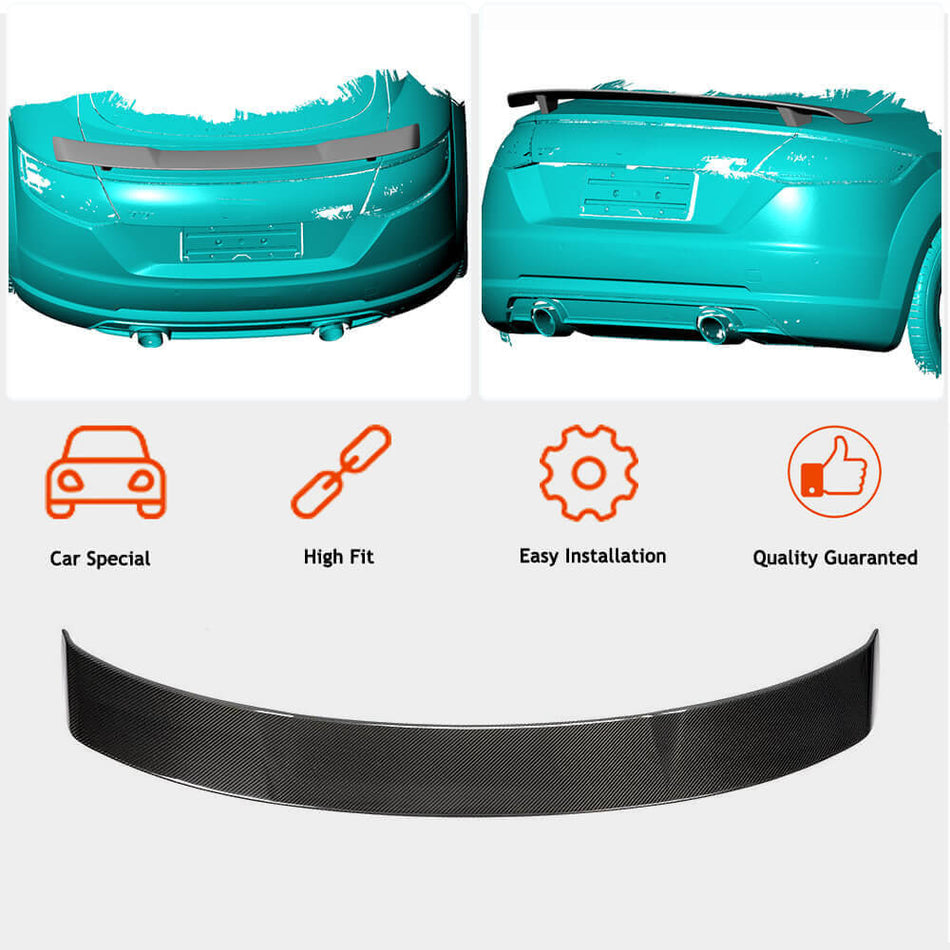
The fixed rear spoiler is one of the most recognizable TT RS features, so rear upgrades require particular attention. Before purchasing another spoiler or wing, confirm whether the product replaces the original unit, mounts to the existing hatch or requires removal of factory hardware. Vehicles with a spoiler-delete configuration, previous aftermarket wing or modified hatch may require a different installation approach.
Rear bumper components should also be selected around the actual exhaust layout. Confirm the number, shape and position of the outlets, as well as the factory diffuser or lower valance. A rear part should not be selected only because the model name and year appear correct in the title.
Consider Daily Driving and Ground Clearance
Lower-body parts can change both the appearance and everyday usability of the vehicle. Side skirt extensions, splitter sections and deeper diffuser fins may be more exposed to steep driveways, parking ramps, road debris and uneven pavement. Owners who regularly use the TT RS as a street car may prefer a more restrained lower-body package, while a more aggressive build may require additional attention to clearance and mounting support.
The same principle applies to part placement. Extensions that sit too far outside the original body line may appear visually disconnected or become more vulnerable during daily use. Review installed photos, dimensions and mounting locations before choosing between a subtle OEM-plus appearance and a more track-inspired exterior.
Confirm Mirror Features, Materials and Installation
Replacement mirror covers may be offered in different versions for vehicles with or without lane-change assistance. Confirm the mirror shape, sensor opening and factory equipment before ordering. Overlay-style covers and full replacement shells should also not be treated as the same type of installation.
Materials and mounting methods vary across the collection. Some components use woven carbon fiber, dry carbon construction or carbon-reinforced composite structures. Smaller trims may use automotive adhesive, while spoilers, side skirts and larger bumper components may require screws, brackets, panel removal or professional adjustment.
Test-fit every component before drilling, applying adhesive or removing protective film. Check the contact surface, left-to-right alignment, panel gaps and clearance around sensors, lights, exhaust outlets and moving panels. Adhesive-mounted parts should be installed on a clean surface free of wax, oil and coating residue, while structural or screw-mounted parts should be supported according to their individual installation method.
Looking for TT, TTS or Other Audi Parts?
Parts intended for the standard TT or TTS are organized separately in the Audi TT and TTS collection. To browse exterior parts for other Audi models, visit our Audi parts by model.
When compatibility is unclear, send the vehicle year, generation, factory bumper configuration, spoiler setup and clear photos of the relevant area through our fitment support page. Confirming these details before ordering is the most reliable way to avoid receiving a component designed for a different generation, body panel or exterior package.